Off-Road Vehicle Accessories: A Buyer's Guide to Front and Rear Bumpers
What buyers actually need to decide before ordering off-road vehicle accessories
Off-road vehicle accessories cover a wide range of parts, from roof racks and side steps to modified hoods and underbody skid plates. This guide focuses on the two accessories that carry the most structural and commercial risk: front and rear competition bumpers. They change vehicle weight, recovery options, approach and departure angles, and the way the vehicle is perceived by end customers.
The central decision is not which bumper looks best in a photo. It is whether a given bumper can be confirmed for a specific vehicle model, mounted with the supplied hardware, and supported by documentation the buyer can verify. That decision sits between product selection and supplier evaluation, and it usually requires more than one round of questions.
Where front and rear bumpers sit in the accessory range
Front competition bumpers replace the original front bumper assembly and typically include a bumper body, mounting brackets, a lower plate section, and a fastener set. Rear competition bumpers are usually described by their structural role, recovery points, and styling. Roof racks, side steps, skid plates, hoods, and tailgate modules are separate accessory categories with their own fitment and load considerations.
Treat each category as its own sourcing decision. A supplier that can show a complete component layout for one bumper is not automatically able to confirm every other accessory in its catalog. Ask for evidence per part number, not per brand.
Define the requirement before you compare suppliers
A clear requirement shortens supplier conversations and reduces the chance of ordering a part that cannot be installed. Write it down before requesting quotes.
- Vehicle model and variant: state the exact model, year, trim, and any factory options that affect the bumper mounting area.
- Use case: daily road use, light trail use, or recovery-oriented off-road use. Each changes the priority given to structural rigidity, recovery points, and weight.
- Included components: confirm whether the offer includes the bumper body, mounting brackets, lower plate, and fastener set.
- Recovery requirements: if recovery points are needed, confirm the capacity and fitment of the chosen design rather than assuming a tow point is rated for recovery.
- Appearance and finish: angular styling and name plates are visible selling points, but they should be confirmed against the actual delivered configuration.
- Documentation: ask what fitment confirmation, mounting instructions, and component lists are supplied.
Separate must-have specifications from preferences
Must-haves are the specifications that make the part installable and safe for the intended use: correct vehicle fitment, complete mounting hardware, and confirmed recovery capacity where applicable. Preferences include finish, styling, and branding details. Mixing the two makes it harder to compare offers and easier to accept a part that looks right but does not fit.
Front competition bumper: what the component layout tells you
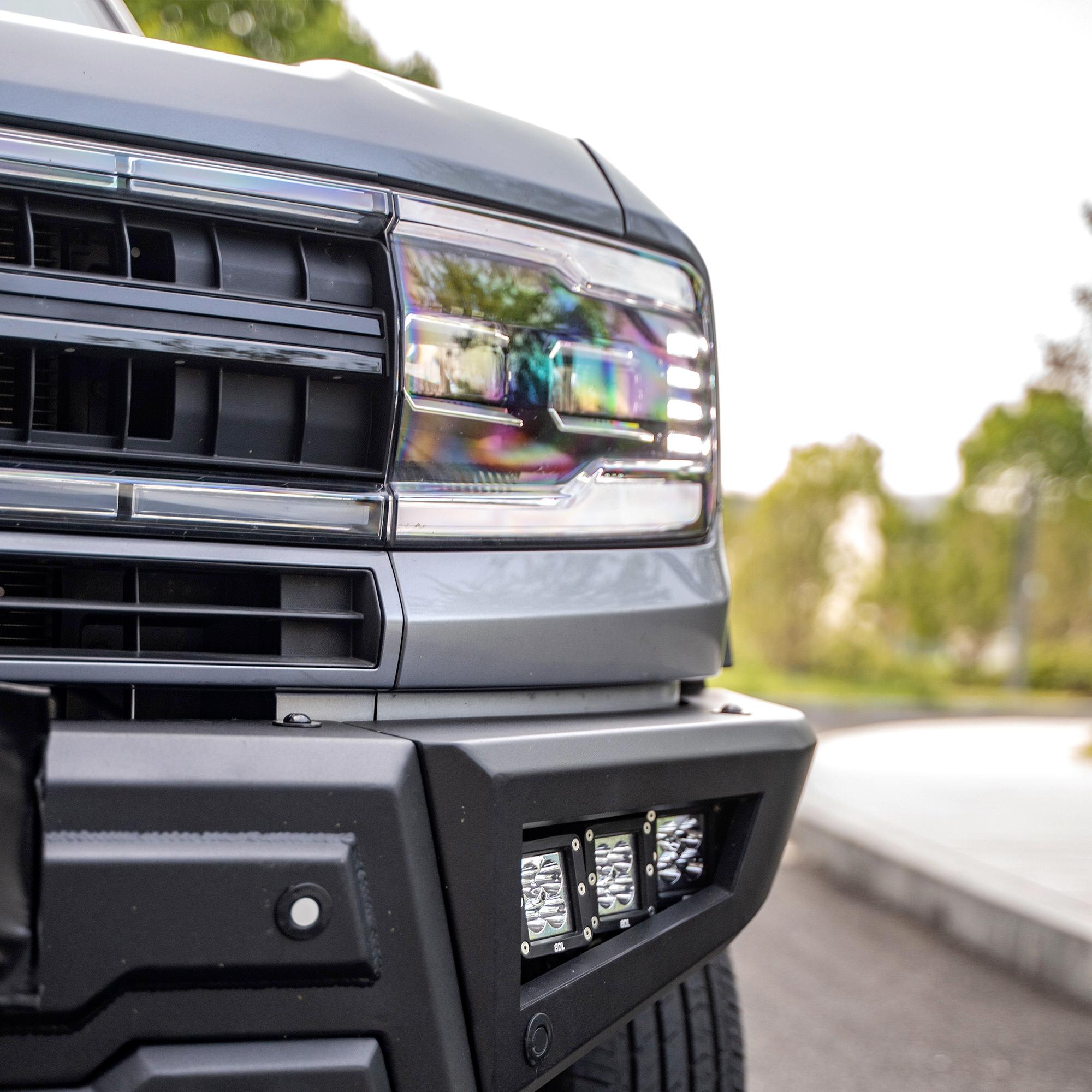
A front competition bumper is best evaluated from its component layout, not only from an installed photo. The supplied example for the Tank 400 shows a bumper body, mounting brackets, a lower plate section, and a fastener set, with the installed view showing the bumper on the vehicle with a Peerless Hero name plate.
That layout matters for procurement because it shows what the buyer should expect in the box and what must be confirmed before ordering. A photo of the bumper on a vehicle does not, by itself, prove that the brackets match a specific model year or that the fastener set is complete.
Questions to ask about a front bumper offer
- Which vehicle model and variant is the bumper confirmed for?
- Are the mounting brackets included, and do they match the vehicle's original mounting points?
- Is the lower plate part of the delivered assembly, and how does it attach?
- Is the fastener set complete for the installation, and are replacement fasteners specified?
- What does the installed example show that the component layout does not, and vice versa?
Rear competition bumper: structural role and recovery points
Rear competition bumpers are commonly described in terms of structural rigidity, recovery use, and appearance. The supplied rear bumper photo galleries describe a steel rear bumper family designed for structural rigidity and recovery use, with integrated towing points that may support recovery setups. The same material notes that capacity and fitment of the chosen design must be confirmed.
That qualification is the important part. An integrated towing point is a design feature; it is not a confirmed recovery rating. Buyers should ask for the capacity and fitment confirmation for the specific design they intend to order, and should not treat a photo gallery as a specification sheet.
How to read a rear bumper photo gallery
Photo galleries are useful for shortlisting styles and understanding the angular shape of a bumper family. They are not a substitute for a confirmed part number, mounting detail, or capacity statement. Use the gallery to narrow options, then ask the supplier to confirm the available part and mounting details for your vehicle and preferred configuration.
Decision table: comparing bumper options before you commit
Decision areaFront competition bumperRear competition bumperWhat to requestPrimary roleFront-end protection and appearance; lower plate section shownStructural rigidity, recovery use, and rear appearanceIntended use statement and confirmed fitmentIncluded componentsBumper body, mounting brackets, lower plate, fastener set (per supplied example)Configuration confirmed per inquiry; photo galleries show styles for discussionComponent list per part numberRecovery featuresConfirm whether recovery points are included and ratedIntegrated towing points may support recovery setups; capacity must be confirmedWritten capacity and fitment confirmationFitment evidenceVehicle model and variant confirmationVehicle model and variant confirmationModel, year, trim, and mounting detailsAppearance detailsName plate and styling shown on installed exampleAngular shape described in galleryConfirmation that delivered configuration matches the sampleSupplier evaluation: what to verify before placing an order
Supplier evaluation should focus on evidence, not adjectives. A supplier may describe a bumper as structural or recovery-ready; the buyer's job is to find out what that means for the specific part being ordered.
- Fitment confirmation process: ask how the supplier confirms the part against your vehicle model and variant, and what information they need from you.
- Component documentation: request a component layout or parts list for the exact bumper, including brackets, plates, and fasteners.
- Capacity statements: for recovery points, ask for the capacity and fitment confirmation of the chosen design in writing.
- Sample and photo consistency: compare the installed example, component layout, and gallery photos to see whether they describe the same configuration.
- Customization scope: if you need a modified configuration, confirm what can be changed and what remains fixed.
Warning signs in a bumper offer
Be cautious when a supplier shows only installed photos with no component layout, when recovery points are described without any capacity confirmation, or when the vehicle model and variant are not stated. These gaps do not prove a problem, but they shift risk to the buyer and should be resolved before ordering.
Sample and order validation
Before a full order, validate the configuration. A sample or pre-production unit lets you check bracket alignment, fastener completeness, and whether the delivered appearance matches the photos. Confirm in writing which vehicle model and variant the sample was built for, and compare it against the production specification.
For rear bumpers, ask how the integrated towing points are confirmed for the chosen design. For front bumpers, check that the lower plate and fastener set are present and match the component layout. If the supplier cannot confirm these details for your model, treat the offer as unconfirmed rather than assuming it will fit.
Next steps for a buyer
Start with a written requirement that names the vehicle model, variant, intended use, and required components. Then ask each supplier for fitment confirmation, a component list, and capacity statements where recovery points are involved. Compare offers on those confirmed details rather than on styling alone. When the details are confirmed for your model, the order conversation becomes a specification check rather than a guess.